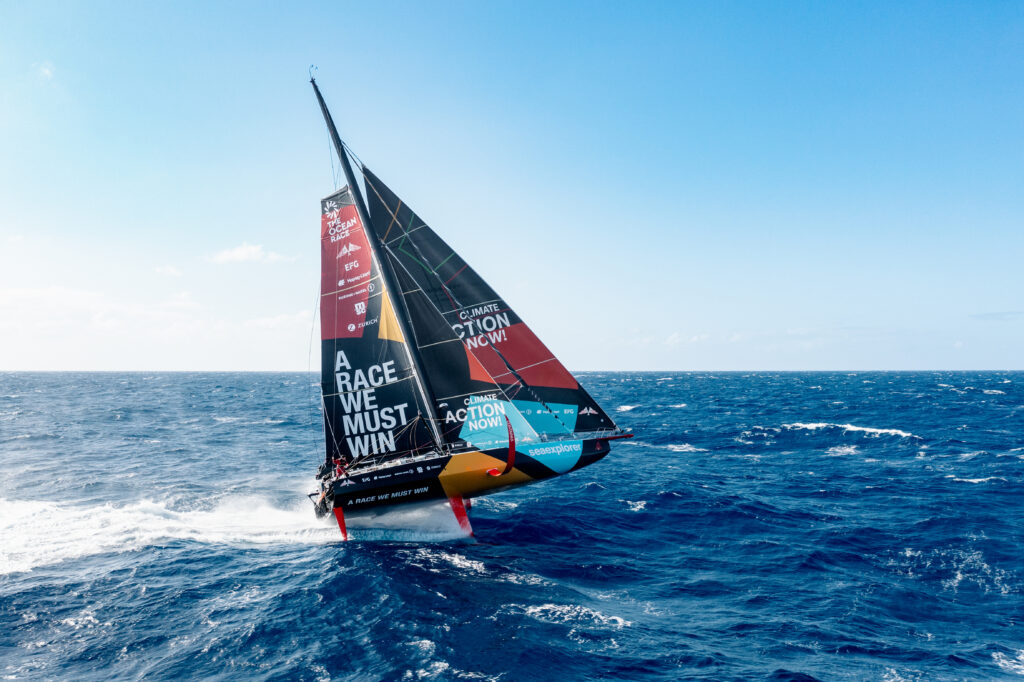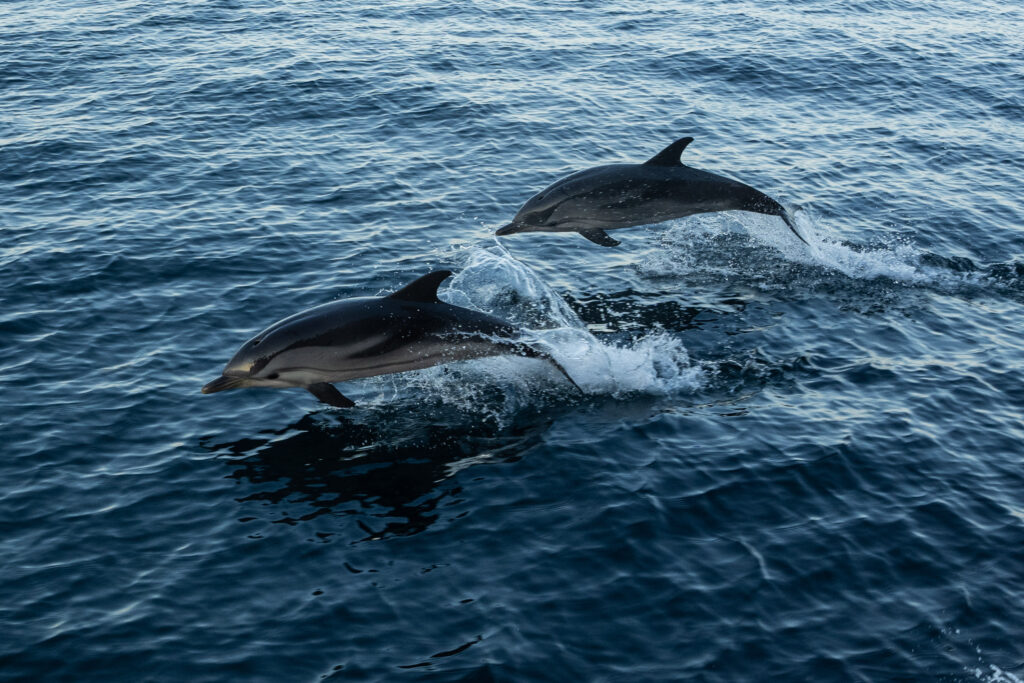

On Friday, June 19, the fleet of the 2026 Newport Bermuda Race sets off on 636 nautical miles of open Atlantic, on one of the oldest and most respected ocean races in the world. The course crosses waters that are home to some of the ocean’s largest animals — including the critically endangered North Atlantic Right Whale.
This edition brings something new. The Bermuda Race Organizing Committee has joined the Marine Mammal Advisory Group (MMAG), and through Notice to Competitors No. 7 it asks every crew to do three simple things while racing: keep a continuous watch, report every hazard they encounter, and monitor the reports coming in from other boats.
Behind that workflow is technology we are proud to have developed at Safewave: the MMAG Hazard Button and the Marine Strike Log; the reporting and data infrastructure that turns individual sightings into a shared, fleet-wide hazard picture.
Why it matters
Why it matters
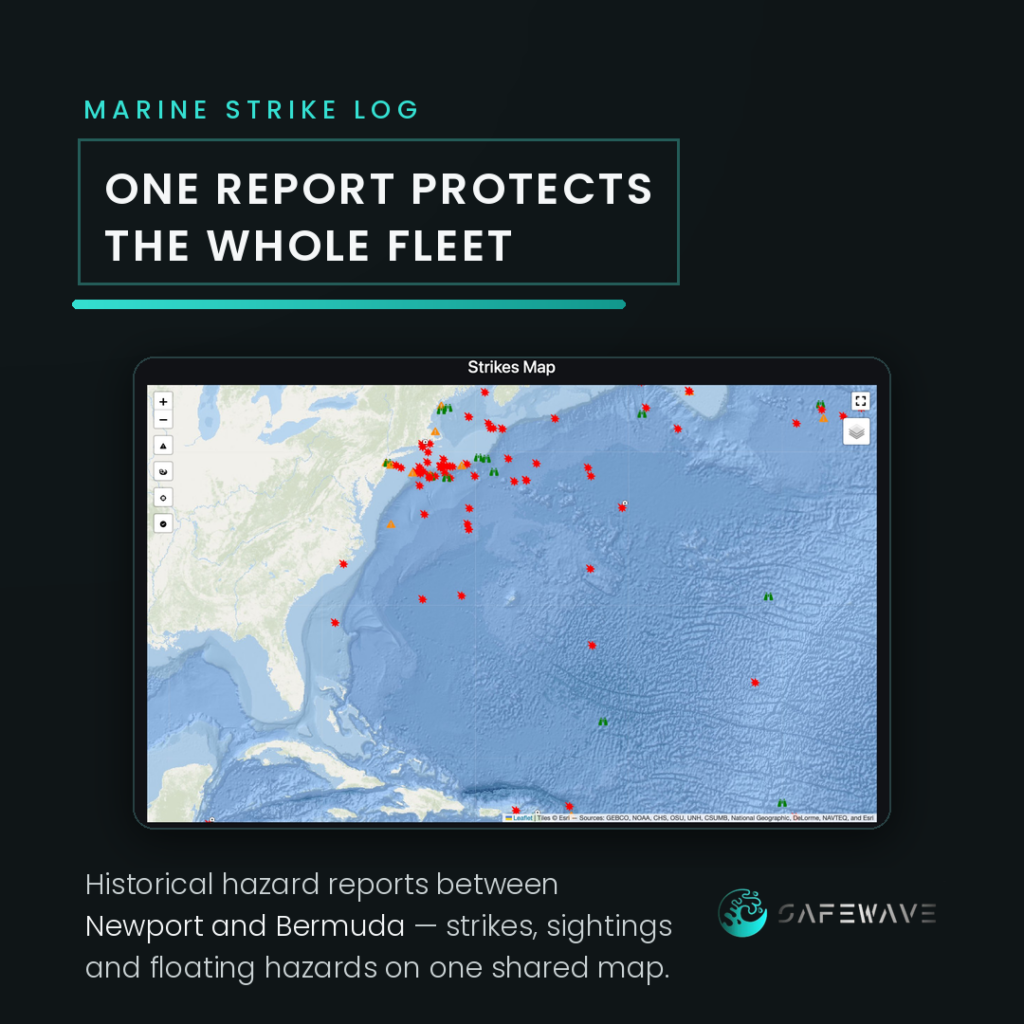
A whale surfacing ahead of one boat is invisible to the boat twenty miles behind, unless someone reports it. Collisions between vessels and marine mammals are dangerous for the animals and for the sailors: at offshore racing speeds, a strike on a whale or a large floating object can end a campaign, or worse. The idea behind the Hazard Button is simple: every racing yacht becomes a sensor, and every report becomes protection for the rest of the fleet, and for the whales.
The data does not disappear after the race, either. Every report feeds the Marine Strike Log, a growing record of strikes, sightings and floating hazards that supports the scientific community working on vessel-strike risk in the North Atlantic.
How crews can use it
How crews can use it
Reporting is built into the tools navigators already use, so there is nothing new to learn at sea.
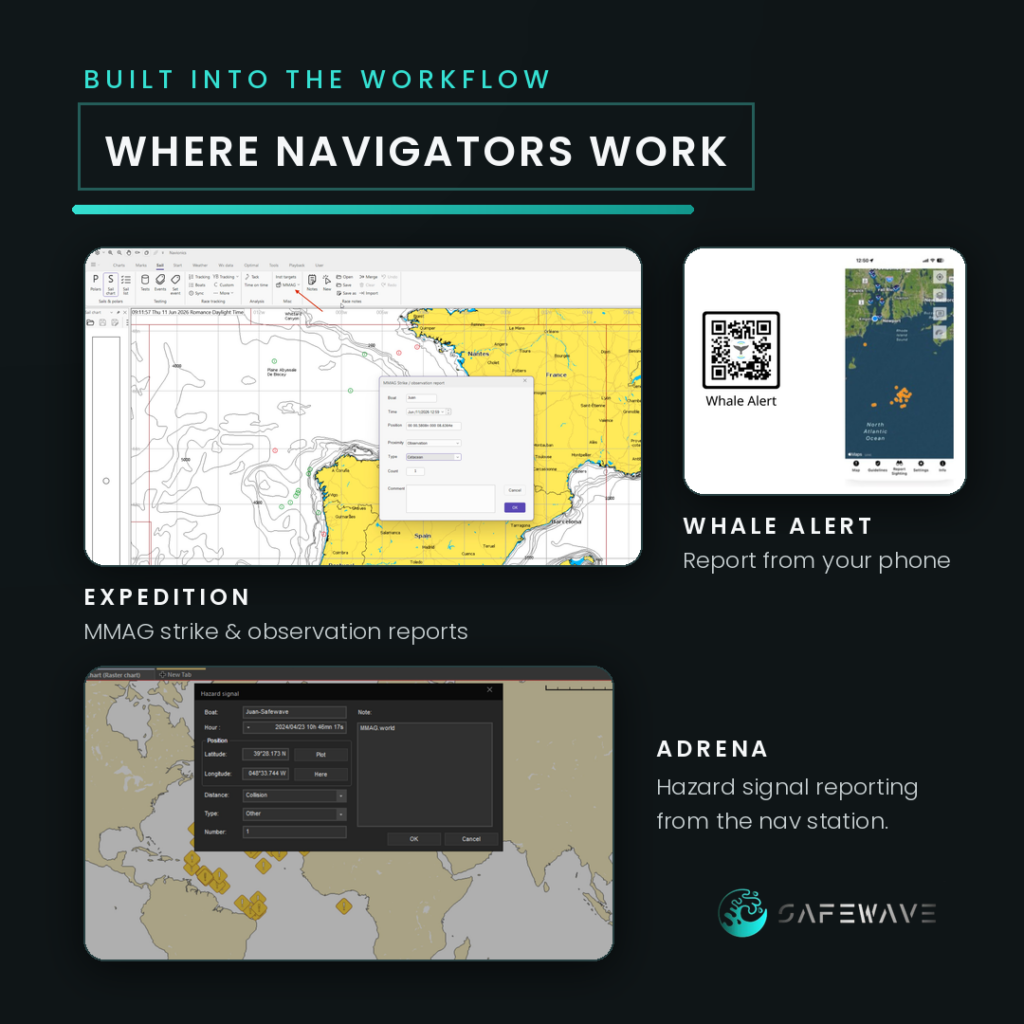
In Expedition, MMAG strike and observation reports are integrated directly: crews can enable the marine mammal strikes layer in the display settings and use the MMAG function in the Sail tab to submit reports and update the latest strikes and observations on the chart.
In Adrena, crews can log a report through the hazard signal function from the nav station, with position and time captured automatically.
And for anyone on deck or ashore, the Whale Alert app allows sightings to be reported from a phone in seconds, and shows recent reports on a live map — including the waters off Newport where the fleet will start.
One report from one boat can protect every boat behind it. That is the whole system, working as intended.
Built in Alicante, sailing worldwide
Built in Alicante, sailing worldwide
The Hazard Button and Marine Strike Log were developed by Safewave for the Marine Mammal Advisory Group, as part of our mission to bring real-time safety and ocean intelligence to offshore and remote maritime environments. Seeing the system in the hands of the Bermuda Race fleet, alongside partners like Whale Alert and the navigation software teams at Expedition and Adrena, is exactly what we built it for.
Fair winds to every crew heading for St. David’s Lighthouse. Keep watch, report what you see, and check the chart.
Image credits:
Header and post photo © Jen Edney, Viva México and The Ocean Race. All rights reserved.
Safewave builds real-time safety, monitoring and data intelligence systems for offshore and remote maritime environments. For more about the MMAG Hazard Button and Marine Strike Log, contact us.